
Lesson 6.1: Technology and Aids
Technology and Tools in Neuro-Affirming Coaching
This lesson explores how to use simple, purpose-driven tools to empower clients, reduce cognitive load,
and build autonomy through accessible technology.
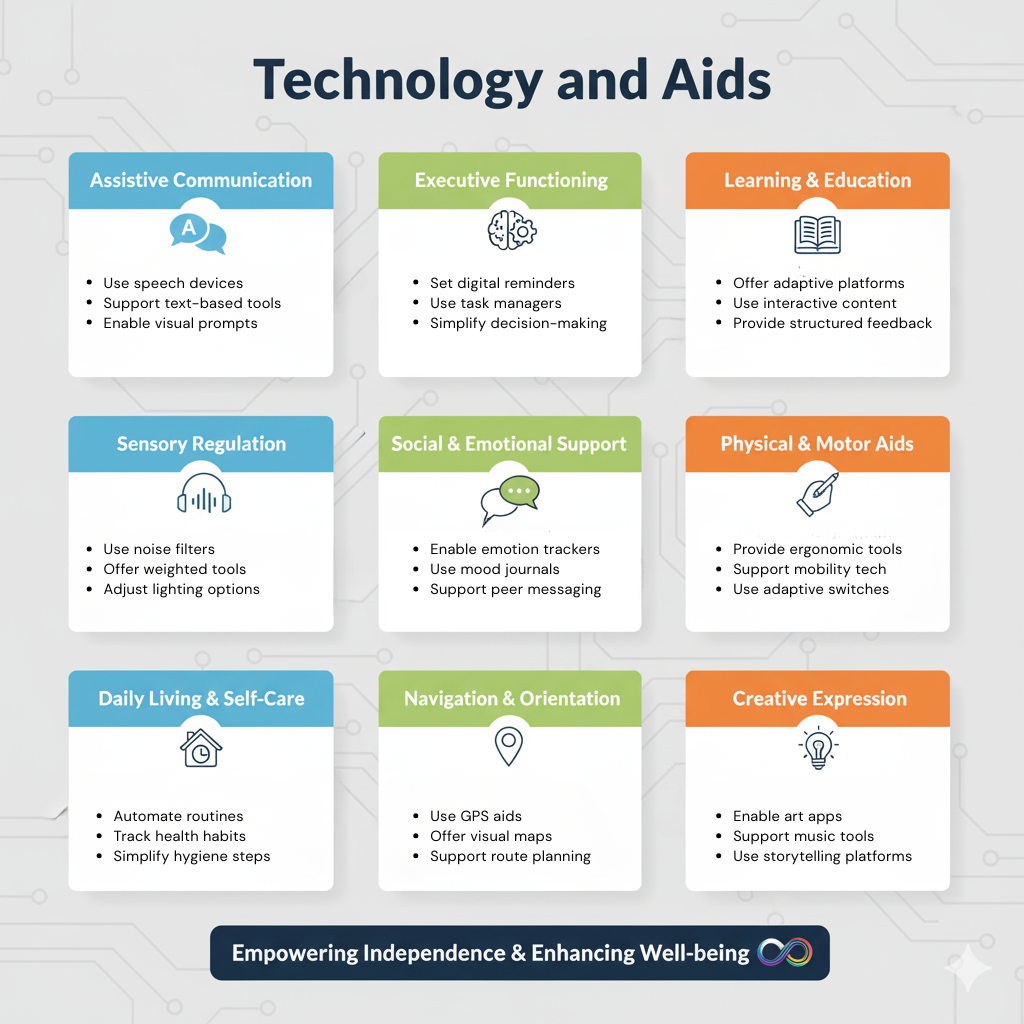
Key Concepts and Learning Guide
Welcome to Module 6. You have now established a strong theoretical and pedagogical foundation for your
coaching practice. We now turn our attention to the tangible tools that can be co-created and used to
support your clients. This is not about a one-size-fits-all approach to technology, but about
intentionally selecting and teaching tools that align with a client’s unique needs.
Research and practice show that many complex software solutions, such as Dragon Dictate, can be
difficult to navigate and are not always accessible for a neurodivergent mind. As a Neurocoach,
your goal is to empower, not overwhelm. Therefore, we focus on simple, purpose-driven tools that
reduce friction and cognitive load, enabling your client to thrive. This approach sits at the core of
the Dynamic Development Plan (DDP), which prioritises individualised, practical support over complex,
high-demand systems.
Linking Technology to Learning and Coaching Theory
When used well, technology can act as a form of externalised working memory, reducing
the load on planning, sequencing, and recall. This is closely related to cognitive load
theory, which reminds us that when a system is too complex, the person may lose capacity for
reflection and problem-solving. In a neuro-affirming context, we deliberately choose tools that simplify
steps, clarify information, and make invisible processes visible.
These tools also support an autonomy-supportive coaching stance. Rather than
“fixing” the client, you co-design a toolkit that aligns with their strengths, preferences, and energy
patterns. The aim is not dependency on technology, but a scaffold that can be gradually reduced as skills
become internalised. This aligns with the strengths-based, co-created ethos of the DDP and the wider
philosophy of neuro-affirming practice.
Teaching Point: The Purpose-Driven Toolkit
The most effective tools are easy to use and directly address a specific challenge. Your role as a coach
is to help the client identify their “superpower” and find a tool that amplifies it. You will teach them
to use these tools strategically — not as a crutch, but as a scaffold for success.
Practical Tools for Support
1. Visual Organisation Tools
For clients who think in pictures or struggle with abstract planning, visual tools are invaluable.
They externalise thought processes, making them tangible and manageable. Mind-mapping apps such as
Miro or Freeform, or even a physical whiteboard, can be highly effective. The key is to teach the
client to build a visual roadmap of their day or project in a way that makes sense to them.
In Action: Teach a client to create a “morning routine” mind map with branches for
Breakfast, Getting Dressed, and Keys, using icons or small pictures to create a clear visual flow
that reduces the cognitive effort of remembering each step.
2. Time Management and Focus Aids
Time blindness and difficulty with task initiation are common challenges. Simple, visual timers are
often more effective than complex project management systems. The Pomodoro Technique (for example,
25 minutes of focused work followed by a 5-minute break) can be easily taught using free visual
timer apps such as Tiimo or built-in device timers.
In Action: Teach a client to use a non-alarming visual timer that shows a shrinking
coloured circle as time passes. This visual cue helps regulate energy, maintain focus, and reduce
time-related anxiety without relying on constant internal monitoring.
3. Accessible Text-to-Speech and Speech-to-Text
Instead of relying on expensive, complex software, you can often use built-in accessibility tools
available in most modern devices. These features can make reading and writing less burdensome,
supporting both confidence and self-advocacy.
In Action: Teach a client how to use their phone’s built-in text-to-speech feature
to listen to an email or document. This allows them to check for errors and comprehend content
without the mental fatigue of reading line by line, particularly at the end of a cognitively
demanding day.
By focusing on simple, purpose-driven tools, you are not just offering quick fixes. You are teaching
clients to build a personalised toolkit that supports autonomy, aligns with their strengths, and allows
them to navigate the world confidently. This is the essence of empowering a neurodivergent mind within
the Dynamic Development Plan (DDP) framework.
Applied Task: Critical Evaluation of a Neuro-Affirming Technology Tool
In this task, you will move beyond description and demonstrate your ability to critically evaluate how
technology supports or hinders neurodivergent clients in practice.
Purpose:
To write a focused, 400–500 word evaluative paper on one technology tool (or category of tools) used in
neuro-affirming coaching, showing how it reduces cognitive load, supports autonomy, and aligns with the
principles of the Dynamic Development Plan (DDP).
Task:
-
Choose one tool or category of tools discussed in this lesson. For example:
visual organisation tools, visual timers, built-in text-to-speech/speech-to-text, or other simple
accessibility tools. -
Write a 400–500 word evaluative paper that includes:
-
A clear description of the tool and the specific challenge it is designed to address (e.g.
time blindness, organisation, reading fatigue). -
An analysis of how the tool supports a neurodivergent processing or communication style,
referring to concepts such as cognitive load, scaffolding, sensory regulation, or
externalised working memory. -
A critical discussion of advantages and limitations, including accessibility, ease of use,
potential barriers, and any risks of overwhelm or dependence if misused. -
A brief link to coaching or learning theory (for example, scaffolding, autonomy-supportive
practice, or strengths-based coaching) to explain why this tool fits a neuro-affirming
approach. -
A concluding paragraph explaining how the tool could be integrated into a client’s DDP and
how you would review its ongoing usefulness with them.
-
A clear description of the tool and the specific challenge it is designed to address (e.g.
-
Ensure that your writing style is clear, evidence-informed, and reflective, demonstrating a
thoughtful professional stance rather than a purely descriptive overview.
Prompt to Support Your Writing:
You may find it helpful to structure your paper with the following headings:
• Introduction: The chosen tool and its purpose
• Analysis: How this tool supports a neurodivergent client
• Advantages and limitations
• Integration into the Dynamic Development Plan (DDP)
• Conclusion: Your professional judgement on its value
Submit your 400–500 word evaluation to your tutor within 7 days of completing this lesson. You may use
any of the templates from the Toolkit resources to support your planning, but your final submission
should be in continuous prose.
Resources
This section contains toolkits and templates to support your applied task and client work.
Applied Task
Level 5Guidance for this level: Evaluate the potential outcomes of applying this idea in practice.
