
Lesson 4.2: Goal Setting and Accountability
Goal Setting and Accountability
This lesson explores how to set goals and create accountability systems that are adaptive, supportive, and aligned with neuro-affirming coaching principles.
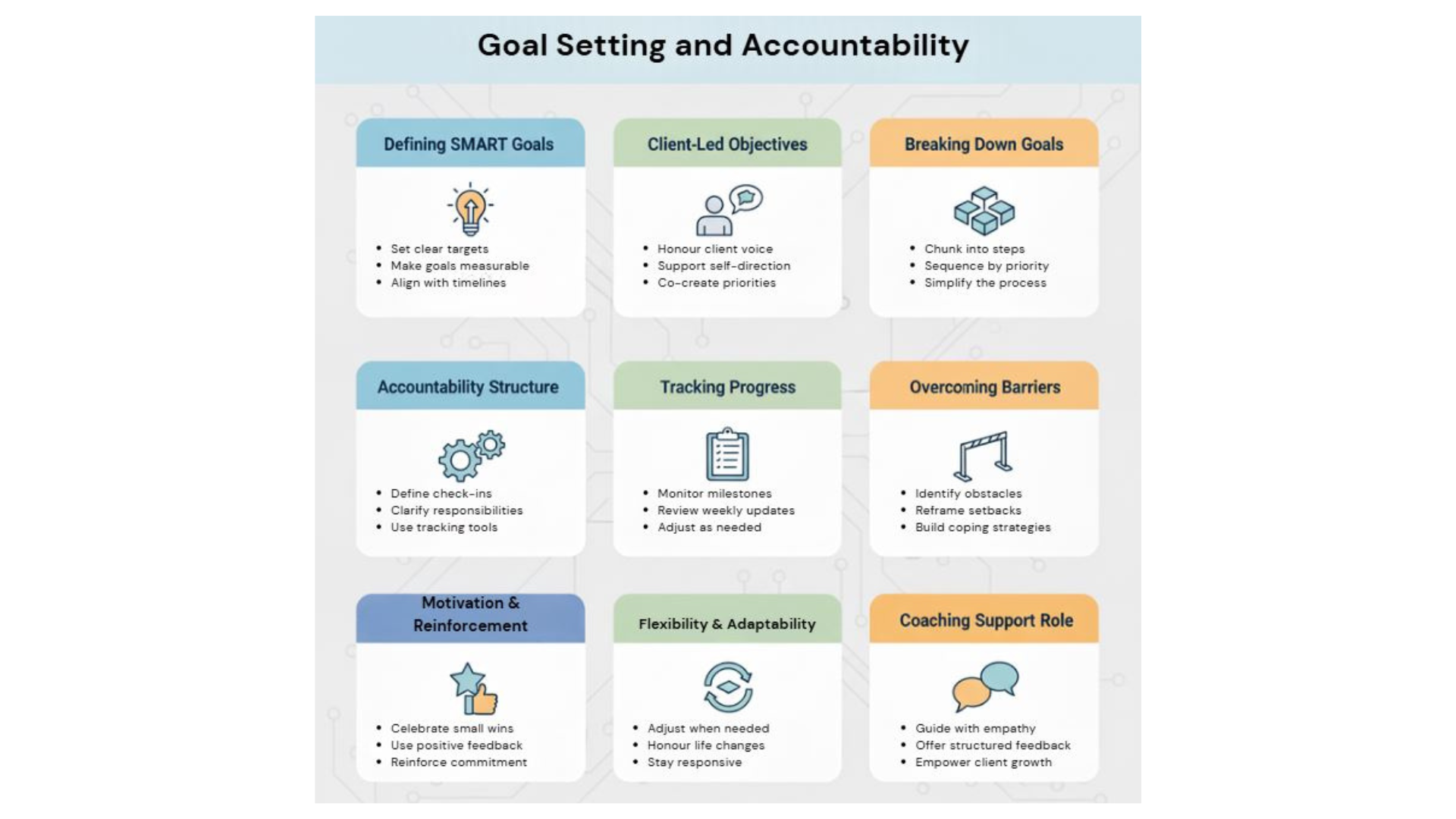
Key Concepts and Learning Guide
Following on from our discussion of core coaching principles, this lesson applies those ideas to the practical process of setting goals and ensuring accountability. While traditional coaching often relies on the SMART model (Specific, Measurable, Achievable, Relevant, Time-bound), a neuro-affirming approach requires us to adapt this framework to a client’s natural way of thinking and processing.
For many neurodivergent clients, a time-bound target can create anxiety and trigger avoidance. Equally, a measurable goal may feel overwhelming or abstract. Our role is to co-create goals that feel supportive, achievable, and aligned with their strengths. This mirrors the Dynamic Development Plan (DDP), which is built on collaboration, clarity, and co-production.
Goal Setting: A Neuro-Affirming Approach
Principle 1: Focus on Micro-Goals
Break goals into small, doable steps that build confidence and create momentum. Micro-goals help regulate overwhelm and ensure steady progress. Dr Edward Hallowell emphasises that breaking tasks into manageable components reduces cognitive load and supports motivation.
In Action:
Instead of: Get a new job in six months.
Say: This week, let’s update your CV. Next week, we’ll write one cover letter together.
Principle 2: Harness Special Interests and Strengths
Align goals with a client’s natural strengths or interests. Special interests are not barriers; they are engines of focus, creativity and resilience. Dr Temple Grandin frequently highlights how meaningful, interest-driven pathways create long-term success.
In Action:
Instead of: Increase income.
Say: Could your passion for retro gaming become a business? A blog? A curated shop?
Accountability: A Supportive Framework
Accountability for a neurodivergent person should be a supportive partnership, not a source of pressure. It is about checking in on progress, celebrating small wins, and collaboratively problem-solving when a task feels too difficult or a plan needs to be adjusted. The accountability framework is a key tool in Awakening the Workforce’ to ensure neurodivergent employees feel supported and valued.
Principle 3: Co-Created Accountability
Work with the client to determine their preferred method of accountability. For one person, it might be a quick text message check-in. For another, it might be a detailed progress report. The key is that the client chooses a method that works for them. As Sir John Whitmore, a pioneer of executive coaching, noted, “Coaching is about helping a person find their own solutions without being told what to do.” This principle of autonomy extends to the accountability process itself.
In Action:
Instead of: I’ll check in next Tuesday to see your progress.
Say: What type of check-in feels most comfortable, email, text, or discussing it at the start of our next session?
These principles align with the Dynamic Development Plan (DDP) and with the strengths-based approaches explored in Awakening the Workforce. They promote autonomy, clarity, and meaningful progress rather than stress and compliance.
Applied Task: Neuro-Affirming Goal Setting and Accountability
Apply micro-goals, strengths-based planning, and collaborative accountability to design a neuro-affirming goal plan for a fictional or real client.
Purpose:
To develop a practical goal-setting structure that works with a client’s neurotype, sensory profile, and motivational drivers.
Task:
- Choose a client scenario (e.g., preparing for work, creating a routine, launching a business idea).
- Transform a traditional SMART goal into a neuro-affirming goal by:
- Using flexible milestones instead of deadlines.
- Using meaningful progress instead of numeric measurement.
- Anchoring the goal to the client’s strengths or interests.
- Co-design an accountability method that feels supportive, not pressuring.
- Write a 200–300 word reflection explaining how your approach aligns with neuro-affirming coaching principles.
Example:
Traditional goal: Find a new job in six months.
Neuro-affirming goal: Explore one new interest-driven career idea each week and identify three potential job roles that align with personal strengths.
Accountability plan: A short weekly email chosen by the client as a low-pressure, predictable check-in.
Record your work in your learning journal and submit it to your tutor within 5 days.
Resources
Additional reading and tools to support neuro-affirming goal setting and accountability.
Reflective Task
Level 4Guidance for this level: Analyse how different factors affect your understanding.
