
Lesson 1.2: Historical and Cultural Context
Historical and Cultural Context
This lesson explores the evolution of neurodiversity awareness and its cultural implications, moving from a deficit to a strengths, based perspective.
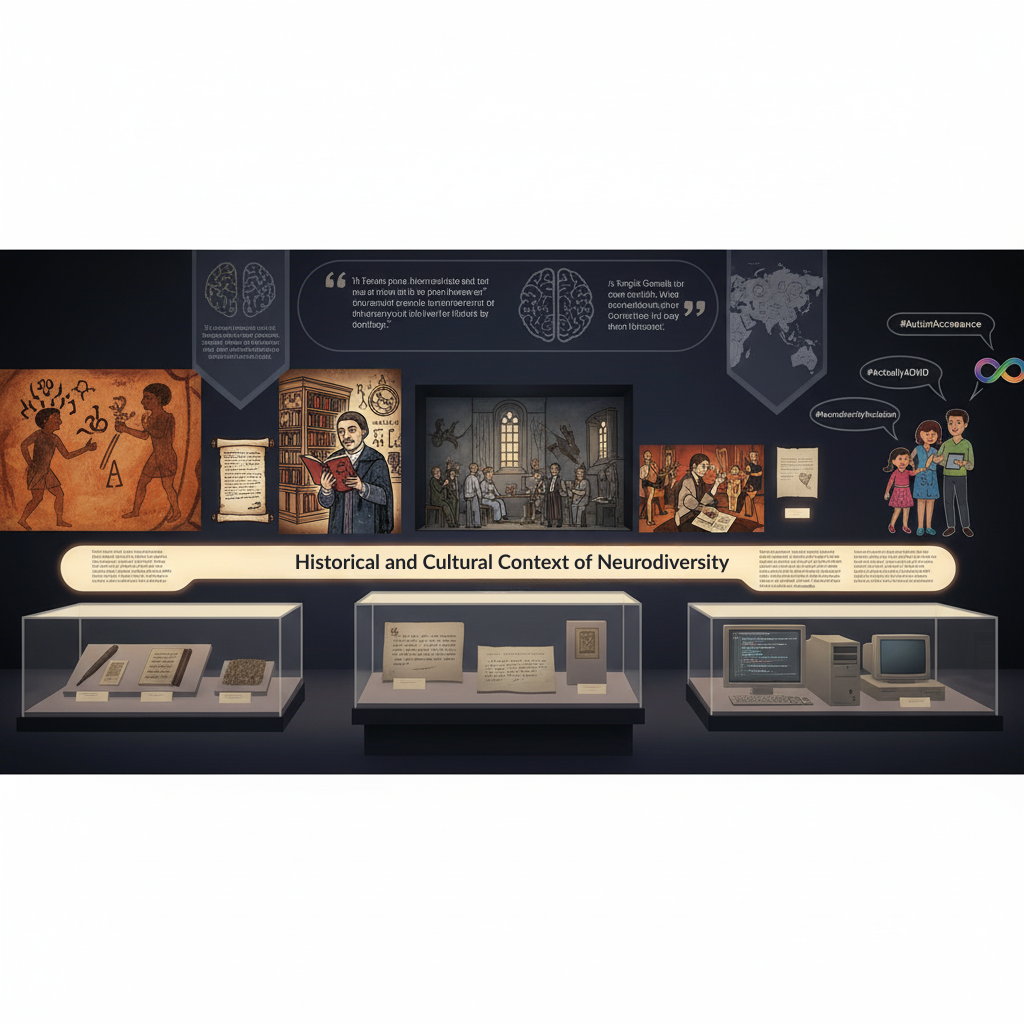
Key Concepts and Learning Guide
Welcome back. In our last lesson, we defined neurodiversity as a natural and valuable form of human difference. Today, we will explore how this perspective has evolved, shifting from historical models that viewed neurodivergence as a deficit to a modern, strengths, based approach.
For decades, conditions like autism and ADHD were primarily understood through a medical or clinical lens. The focus was on identifying symptoms and finding ways to normalise behaviour. This led to therapeutic interventions aimed at fixing perceived deficits, often overlooking a person, s unique strengths and passions. The cultural context was often one of misunderstanding and exclusion.
Teaching Point: The Paradigm Shift
The neurodiversity movement brought about a crucial change in thinking. It championed the idea that neurological differences are simply part of the rich tapestry of humanity, not something to be cured. As a coach, you must internalise this paradigm shift. Explicitly teach your clients that their history is not a reflection of a flaw, but a journey of adapting to a world that was not built for their strengths.
Cultural Implications in Education and Work
This historical shift has profound implications. In educational settings, we are moving away from a one, size, fits, all model. The principles of the Dynamic Development Plan (DDP) provide a blueprint for this, allowing educators to create personalised, strengths, based support for every pupil. The DDP enables a systematic and positive approach that celebrates difference.
Similarly, in the workforce, the cultural context is changing. As noted in Awakening the Workforce, businesses and organisations are increasingly recognising that a neurodiverse team can offer a competitive advantage. This requires a cultural shift in leadership, management, and support, which is what our training programme will equip you to facilitate.
Case Study: Reframing Traits—The Sherlock Holmes Analogy
Sherlock Holmes, as a fictional character, embodies traits that many today would recognise as neurodivergent. His brain can be imagined as a vast railway network with certain tracks engineered for extraordinary speed. These express lines allow him to hyperfocus on details others overlook, the mud on a shoe, the faint scent of tobacco, or the subtle hesitation in a witness, s voice. His trains of thought race ahead, connecting distant stations of information into a coherent map of deduction. This capacity for rapid synthesis is a hallmark of his brilliance. Yet, other tracks in his network are slower, more congested, or less frequently used. Emotional regulation and social conventions, for example, often stall or derail. Holmes may miss cues of empathy or appear detached, not because he lacks feeling, but because those pathways are configured differently, requiring more effort to navigate.
From a coaching perspective, this duality is crucial. A neuro, diversity, informed coach would recognise that Holmes, s extraordinary strengths, observation, logic, and creativity, are inseparable from the challenges he faces in interpersonal contexts. Rather than attempting to normalise him, the coach would help Holmes design strategies that respect his wiring. For instance, structured routines for client interactions could act like signal boxes on the railway, guiding trains smoothly through complex junctions. Conscious pauses before responding could give him time to switch tracks from analytical reasoning to emotional awareness. Even small adaptations, such as preparing written summaries before meetings, would reduce friction and allow him to communicate more effectively without compromising his authenticity.
By reframing difference as potential, the coach highlights that Holmes, s so, called deficits are the flip side of his genius. His aloofness is linked to his ability to detach from bias; his unconventional communication style is tied to his precision of thought. With tailored adaptations, Holmes could thrive not only as a detective but also as a collaborator and friend. The broader lesson for neurodiversity coaching is clear: every brain, s railway system is unique, and success comes from working with those tracks rather than forcing them into a standard map. Celebrating unique pathways transforms difference into innovation, resilience, and brilliance.
Learning Intentions
Upon successful completion of this lesson, you will be able to:
- Demonstrate a comprehensive understanding of the historical and cultural evolution of neurodiversity awareness.
- Evaluate the impact of shifting paradigms from medical deficit models to strengths, based professional embrace.
- Analyse the cultural implications of neurodiversity within modern educational and organisational environments as established in Awakening the Workforce.
- Practise the identification and reframing of cognitive traits through the study of historical and fictional case studies.
The Purpose of the Reflective Task
At the end of each lesson, you will be required to complete a reflective task. These tasks are a cornerstone of our pedagogical approach and are essential for your accreditation. Their purpose is threefold:
- To Foster Critical Thinking: The tasks challenge you to move beyond passive learning and actively engage with the material, applying concepts to real, world and hypothetical scenarios.
- To Build Your Coaching Philosophy: Over time, your journal of reflective tasks will become a living document of your professional growth, articulating your unique coaching style and beliefs.
- To Inform Your Final Paper: The reflections you complete will serve as a rich source of content and evidence for your final 3,000, word essay, ensuring it is a deeply personal and academically sound piece of work.
Reflective Task: A New Lens on History
Choose a historical figure, artist, or scientist, such as Albert Einstein, Nikola Tesla, Emily Dickinson, or Leonardo da Vinci, who displayed traits associated with neurodivergence.
Instructions
- Research their life briefly, focusing on how they were perceived during their lifetime.
- Reframe their characteristics using a strengths, based lens:
- What challenges might have been linked to their neurotype?
- What unique strengths or creative advantages arose from those same traits?
- Reflect in writing, 300, 500 words:
- How might this person, s experience have been different if society had understood neurodiversity through a strengths, based framework?
- What lesson does this offer you as a neurodiversity coach about reframing difference in your own practice?
Write your reflection in the text box below and submit it to your tutor within 5 days of completing this lesson.
Resources
This section contains links to downloadable resources, templates, and further reading materials.
Reflective Task
Level 4Guidance for this level: Analyse how different factors affect your understanding.
