
Lesson 1.1: Understanding Neurodiversity
Understanding Neurodiversity
This lesson will define neurodiversity and explore various neurodivergent conditions.
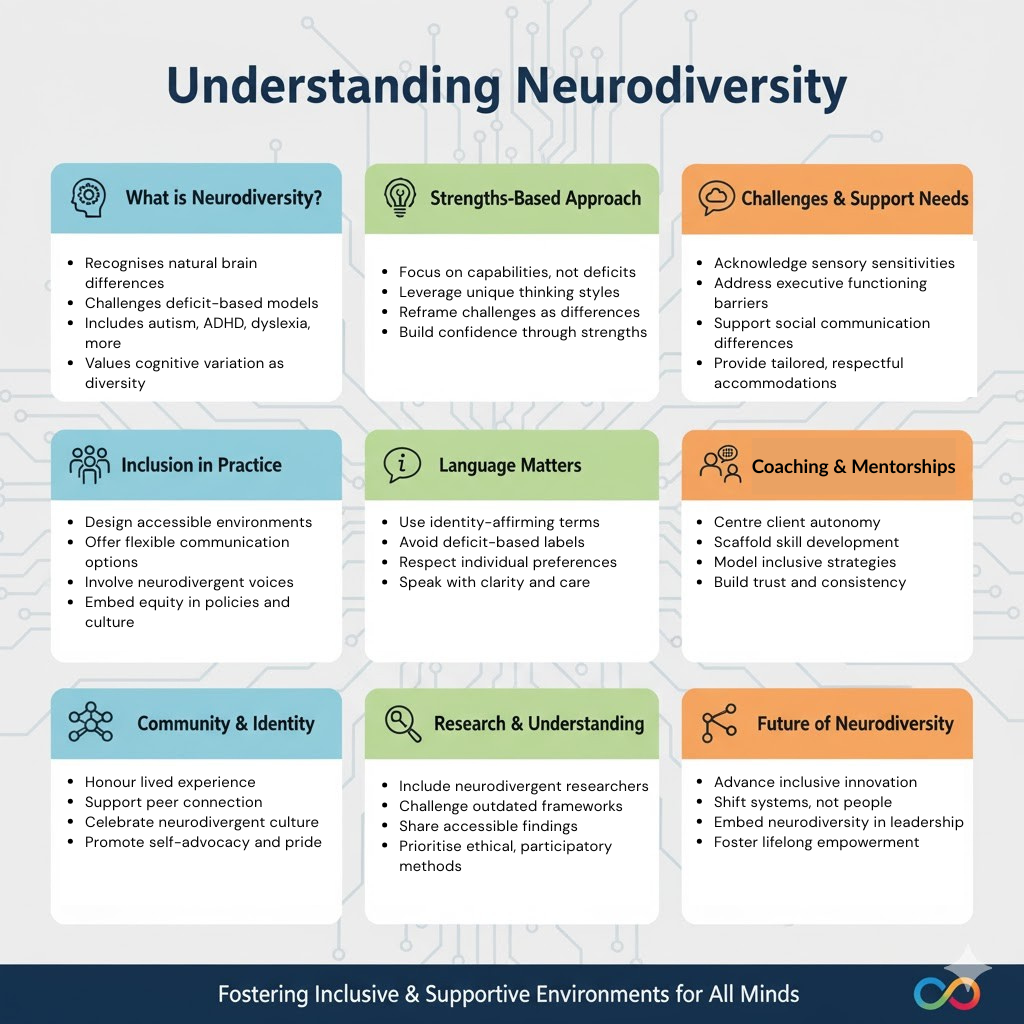
Key Concepts and Learning Guide
Welcome to the Neurocoach Program. This first lesson will serve as a foundational guide to understanding neurodiversity. The concept of neurodiversity suggests that there is no ‘right’ way for the human brain to function. Instead, it posits that variations in brain function, such as those seen in autism or ADHD, are natural and valuable forms of human difference.
This is a core principle in my work, particularly in ‘Autism a Superpower’, which challenges the deficit-based model. Rather than viewing these variations as disorders, the neurodiversity paradigm frames them as a normal part of the human spectrum. This perspective encourages a shift to a strengths-based model, aligning perfectly with the core principles of the Dynamic Development Plan (DDP) and our coaching philosophy.
Teaching Point: The Neurodiversity Paradigm
As a coach, your first teaching point to a client is to help them understand that their way of being is not a fault—it is a difference. Explicitly teach them to identify their unique strengths before they list their challenges. This subtle reframing is the foundation of our coaching practice.
Common Neurodivergent Conditions
It’s important to be familiar with some of the most common neurodivergent conditions. These often overlap in their characteristics and are not mutually exclusive. They include:
- Autism: Characterised by differences in social communication, sensory processing, and patterns of interest.
- ADHD: Involves differences in attention, impulsivity, and activity levels.
- Dyslexia: A learning difference primarily affecting reading and spelling abilities.
- Dyspraxia: Affects motor coordination and planning.
- Tourette’s Syndrome: Causes involuntary movements and vocalisations called tics.
The Shift to a Strengths-Based Model
Our programme, deeply influenced by the practical, strengths-based strategies outlined in ‘The Dynamic Development Plan – A Strengths-based Blueprint for Pupil Support in UK Schools’, moves beyond simply identifying challenges. We focus intensely on identifying and building upon a person’s unique strengths, talents, and abilities. For a person with ADHD, this might manifest as hyperfocus or creativity. For an autistic person, it could be exceptional attention to detail or a unique way of problem-solving. This is the essence of the DDP: it is not about ‘fixing’ a person, but about creating an environment where they can thrive, celebrate their differences, and achieve their goals.
ACTION REQUIRED: All task submissions must clearly reference the required reading materials including the resources below.
Reflective Task: Unpacking Your Biases
The first step to effective coaching is self-awareness. Consider the following question and write down your thoughts below. Minimum 500 words.
Task:
Before starting this programme, what did you believe was the most significant ‘disability’ or ‘challenge’ associated with neurodiversity? Now, after this lesson, what is a potential ‘superpower’ or strength that could be linked to that same trait or characteristic?
Completing this task is essential for accreditation and must be submitted to your tutor within 5 days of completing the lesson, to be discussed in your group or 1:1 session.
Resources
Reflective Task
Level 4Guidance for this level: Analyse how different factors affect your understanding.
